Rodeo Dunes: Colorado's Next Bucket List Golf Destination
Coore and Crenshaw built it on 100-foot sand dunes 35 minutes from Denver.
By Brian Weis
Michael Keiser Jr., son of Bandon Dunes founder Mike Keiser, has done this before. His family put Bandon Dunes on the map, then he and his brother built Sand Valley. Now Micahel is out on his own with a new company called Sand Born, a checkbook, and a Google Earth account. He finds sandy ground nobody else wanted and turns it into the kind of golf that gets bucket list golfers booking tee times before the grass even grows in. So no, Rodeo Dunes is not his first rodeo.
The difference this time is that the rodeo part is literal.
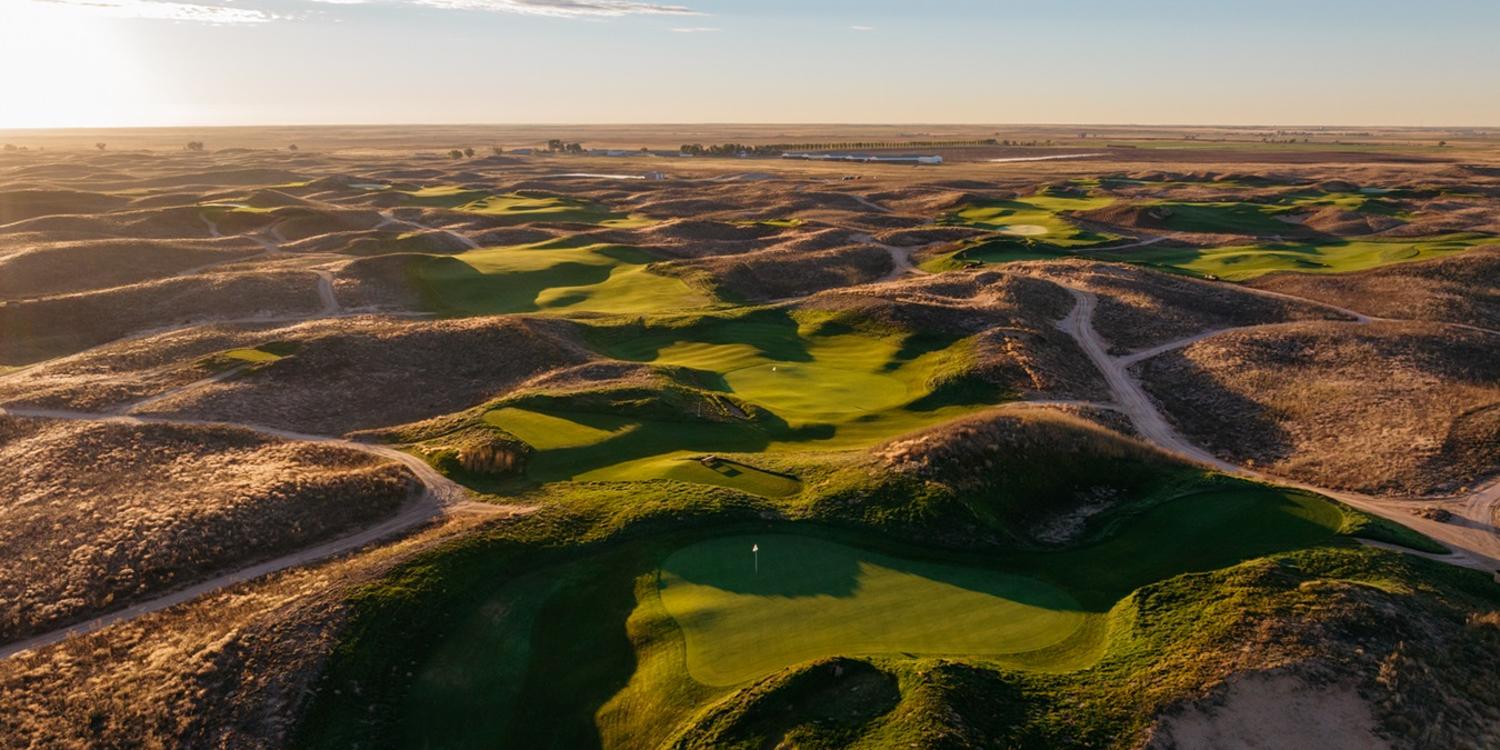
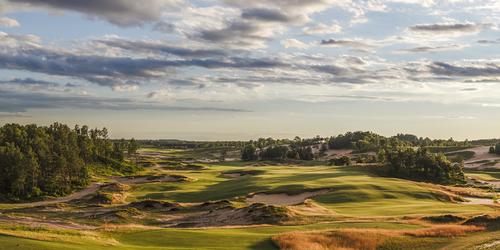
The land sits outside Roggen, Colorado, roughly 35 to 45 minutes northeast of the Denver airport, and it belongs to the Cervi family, the largest rodeo stock contractors in the country, who have ranched it since 1883. The origin story is already golf folklore. Keiser spotted the dunes on a screen, flew out, hopped a barbed wire fence to get a better look, and got himself politely escorted off the property by a ranch hand on horseback. A ham sandwich and four years of patient negotiation later, he had his site. Now there are sand dunes up to 100 feet tall, a Coore and Crenshaw routing threaded through them, and views of the Front Range that stretch better than 100 miles on a clear day, from Fort Collins down toward Pikes Peak.
Here is the honest part. You cannot just book this yet. Right now Rodeo Dunes is founders only, with public play scheduled to begin May 1, 2027. But this is exactly the kind of place a smart buddy-trip crew starts plotting around now, so let me walk you through what is actually out there.
The Course
The first course is Bill Coore and Ben Crenshaw, the same duo who gave the world Sand Hills, which is the course every modern minimalist design gets measured against. That pedigree matters here because Rodeo Dunes is cut from the same cloth: wide off the tee, light on the land, gorgeously contoured, and decorated with the kind of jagged blowout bunkers that look like the prairie just opened up and swallowed your ball whole. The greens are the teeth. Runoffs and furrowed edges turn a slightly missed approach into a genuine decision about whether to putt, chip, or hit the eject button.
Eleven holes opened for a preview called The First Ride in the fall of 2025. The full 18 came online for founders the following spring. The whole thing walks beautifully, which is good, because walking is the only option. Every course here will be walking only, with a few ADA exceptions. Grab a caddie, grab a push cart, but leave the cart-path golf at home.
How to Play It
I had the good fortune to play with a caddie named Ray Ray and a founding member named Josh, and they sent me off the first tee with almost the exact same speech, which tells you everything you need to know about how this place wants to be played.
Keep it in the short stuff. The course is genuinely scorable, but only if you stay out of the long prairie grass of the Northern Plains, which is where good rounds go to die. Take a caddie. Get locked into your lines. Do not get too aggressive. Take what the course gives you. It sounds like the kind of advice you have heard a hundred times, but out here it is gospel, because the penalty for greed is not a bad lie, it is a lost ball and a long walk to the next tee thinking about it.
So that is the lens for the holes that follow. The temptation to swing out of your shoes is constant. The smart money picks a line and a number and trusts it.
The Holes Worth Talking About
Number 4: Pick Your Side
The 4th is a split fairway, and your job off the tee is to know who you are. Long and mid hitters want to take it up the left. Catch enough of it and your ball will find the speed slot and gather a bunch of extra yardage, though it leaves you an uphill shot into the green. It is a fun early test of whether you are going to play this course with your ego or your head.
Number 6: The First Real Dare
Six is the first true risk and reward hole, and it will absolutely talk you into pulling driver. Resist a little. The smart play is 250 or less to an elevated green, which means the whole thing comes down to picking the right distance and the right aiming line rather than just hitting it as hard as you can. Get the math right and you have a look at a great number. Get greedy and the elevation and the trouble do the rest.
Numbers 13 and 14: The Iconic Back-to-Back Par 3s
Here is the stretch you will be texting your buddies about. The back nine serves up consecutive par 3s, and they could not be more different.
The 13th plays uphill to an elevated green stadiumed by a sand dune behind it, which makes for one of the prettiest and most intimidating tee shots on the property. Attack it with a mid to long iron, and play an extra club unless you have got the prevailing wind at your back. The dune frames it beautifully, but it does not bail you out if you come up short.
The 14th is the change of pace, a short par 3 that tumbles down the dune, so you are holding a short scoring iron or a wedge. The catch is a green that slopes away from you, so the smart play is short with some run out, letting the ball drift down to the hole rather than flying it all the way back there and watching it scoot off. Two par 3s, two completely different clubs, two ways to swing the match in the span of twenty minutes.
Number 17: Perfect
Seventeen might be the best hole out here, and it is the one I keep replaying. The green just sits there, 310 to the center, and a carry of around 280 can reach it. So of course you want to take it on. Read the pin first. If the flag is on the left or center, the play is way right, giving yourself the angle and keeping the big trouble out of play. And there is a lot of big trouble: a massive, deep stretch of sand guarding the front, more sand long both right and left, and prairie hay waiting for anything that sails long.
This is the rare hole where the chicken play and the hero play are both completely defensible, and the group bet practically writes itself. Get the number and the angle right and you are putting for three. Get greedy and miss, and you will be writing something on the card you do not want to explain in the parking lot.
A quick note on the rest of the round: a few holes feature blind tee shots, and some fairway misses funnel you down into deeper swales, which is one more reason to take Ray Ray's advice and commit to your lines.
The Scene Right Now (Bring Your Own Patience)
This is the part where I temper your expectations and you love it anyway. Rodeo Dunes in its current form is gloriously bare bones. The clubhouse is a triple wide trailer. Food is a stand and a food truck slinging sandwiches and snacks. There is no lodge, no fancy locker room, no fountain golf. Keiser is not apologizing for any of it. The money and the energy are going into the golf first, which is the entire point and the whole reason places like this end up being worth the trip.
If you have been to early Bandon or early Sand Valley, you know this energy. It is golf, golf, food, crash, repeat. The infrastructure shows up later. For now, the rawness is a feature.
Membership tells you how much demand is already here. Rodeo Dunes signed up its founders at what started around 85,000 dollars and has since climbed to a six figure deposit plus annual dues, and they still cleared more than 300 of them. When 2027 public tee times do get released, the prime season green fee is expected to land around 350 dollars, which for a Coore and Crenshaw original 35 minutes from a major airport is not the stupid number you see at some new trophy courses.
The Rockies: A Seven Acre Reason to Stay for Cocktails
Down near the first tee, in a natural seven acre bowl between the dunes, they are building a putting course called The Rockies. It is the work of Clyde Johnson, and it is a nod to the Himalayas, the legendary putting course at the St Andrews Links. It is that big simply because the land gave them a giant bowl to work with and shrinking it would have been a crime.
If it follows the Bandon model, this is where your day ends. Late afternoon, drink in hand, a few bucks on the line, putting until the light goes. Cocktail golf is one of the great inventions of the modern game, and Rodeo Dunes is building a cathedral for it.
What Is Coming
The second course is already taking shape, designed by Jim Craig, a longtime Coore and Crenshaw shaper getting his first solo 18. It does not have a name yet. The word is that Craig is going to build all the wild, whimsical, dramatic holes Bill Coore would never quite let him build, with more hide and seek pins and more aggressive shaping. The two courses will share a tee complex, so eventually you roll up and pick your poison.
Beyond that, the site has room for up to six courses, and the long range talk includes a third that could host professional championships. Lodging is the big missing piece, with the routing of that second course taking priority for now. Realistically you are looking at three to five years out before there is a place to sleep on property, and nothing has been announced.
Rodeo Dunes is also just one stop in a Keiser building spree that is borderline absurd. Under the Sand Born banner, Keiser is also building Wild Spring Dunes in East Texas, a Tom Doak design already open for preview play, and Old Shores in the Florida Panhandle, another Doak design that recently broke ground. The man is not slowing down.
Where to Stay (For Now)
Until there is lodging on site, you are commuting. Your best bet for a clean, decent room within about 30 minutes is the Best Western in Brighton. It is not the resort experience that is coming, but it gets you a real bed, a shower, and a short drive to the first tee, which is all a buddy trip really needs. Stock the cooler, set the alarm, and treat Brighton as base camp.
The Bottom Line
You cannot play Rodeo Dunes tomorrow, and that is exactly why you should be paying attention today. This is a Coore and Crenshaw course on towering sand dunes, half an hour from a major airport, with a wild putting course, a second course on the way, and a rodeo ranch backstory you could not make up. When the 2027 tee sheet opens, it is going to sell out in a hurry. Get on the list, round up your group, and start the argument about who is driving from the airport.
It is not Michael Keiser's first rodeo. It might just be his best one.
More Information »
Revised: 06/26/2026 - Article Viewed 64 Times
- View Course Profile
About: Brian Weis
 While Brian Weis has made a name for himself in the golf world, he also appreciates the finer things in life - like a world-class spa treatment after a grueling 18 holes (or even after a casual round where the only thing working hard was his golf cart). A self-proclaimed "golfer who enjoys relaxation more than practice," Brian has developed a deep appreciation for massages that unknot his questionable swing mechanics, saunas that sweat out a few too many post-round drinks, and infinity pools with views as stunning as a well-manicured par 3.
Brian’s spa journey began as a reluctant tag-along to couples' massages and resort spa packages but quickly evolved into a full-fledged appreciation for hot stone therapy, deep-tissue recovery, and the occasional seaweed wrap (don’t knock it till you try it). Now, he seeks out the best spa retreats, thermal baths, and relaxation havens wherever his travels take him, whether it's a luxury golf resort with a five-star spa or a hidden wellness gem perfect for unwinding in style.
On SpaTrips.com, Brian shares his experiences, reviews, and insider tips on the best places to soothe sore muscles, indulge in rejuvenating treatments, and find true relaxation, whether you're a hardcore golfer in need of recovery or just someone looking for the ultimate escape. After all, what’s the point of a bucket list golf trip if you can’t top it off with an expert massage, a hot soak, and maybe even a ridiculously plush robe"
Follow Brian Weis:


Contact Brian Weis:
GolfTrips.com - Publisher and Golf Traveler
262-255-7600
More Articles by Brian Weis

Get Social